

Edogawa Ranpo's Mystery Storehouse (vol.2)
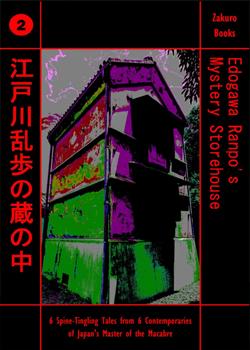
By various authors
Translated by Alexis Brown
Independently published (2025)
ISBN-13: 978-8280297425
Review by Shehrazade Zafar-Arif
Edogawa Ranpo has been nicknamed Japan’s master of the macabre, having spearheaded the golden age of Japanese detective fiction. His work combines the suspense of the mystery genre with an astute grasp of horror. The second volume of Edogawa Ranpo’s Mystery Storehouse, translated into English by Alexis J Brown, features authors who were all Ranpo’s contemporaries, and whose works were found in the storehouse of his home in Tokyo. Like Ranpo’s own writing, the short stories in this collection offer a delicious and terrifying mix of detective fiction and horror.
Oizumi Kokuseki’s Lady Huang’s Hand is a delightfully atmospheric ghost story, in which a student is tormented by an apparition in a window in Nagasaki’s Chinatown, and finds himself drawn into a family’s dark and tangled history. Protagonist Tozo’s powerful narrative voice steers us through the many twists and turns, filled with secretive and mercurial characters, and chilling locations. Throughout, we and he are tormented by the image of an animated, disembodied hand - something that has become a common trope in the horror genre, and which immediately evokes a sense of revulsion.
Next, The Hokkaido Tour by Kusada Kyosuke follows a group of tourists on tour, where a series of strange accidents suggest that someone is plotting a murder. Throughout, Kyosuke taunts us with a sense of dread and suspense as we anticipate the next bout of misfortune, while having us question characters’ motives and true natures all the way up to the story’s final startling twist. He doesn’t hold off on injecting the story with humour either, which makes it one of the lighter reads among the collection.
Oshita Udaru’s Slugs is a particularly grotesque story. Slugs evoke a visceral disgust in most people, and here they become a crucial part of the story of a circus crew and a gruesome accident that may or may not have been deliberate. Udaru’s characters are a motley crew, eccentric and colourful and memorable, from the pitiful O-sai to the cruel Kinzaburo, and the transient, relentless world of the circus forms a perfect backdrop for carnivalesque horror.
Mob Justice by Otsubo Sunao is a slightly convoluted and meandering story that nonetheless leads to a satisfying and shocking end. A narrator with his own agenda tells the story of rival gangs and a man desperate not to be let out of prison. Sunao offers a thrilling commentary on gang violence coupled with a story whose twists and sharp turns leave the reader dizzy, while also withholding information from us until the last minute. It’s a great use of the unreliable narrator, which has inevitably become a common literary device in mystery fiction.
In contrast, Nishio Tadashi’s The Room Above the Barbershop is a short and striking tale told in a storyteller-like voice that brings to mind an old folktale being passed down, in which a painter with supernatural abilities becomes obsessed with a young woman and claims to have visions of the future. It’s dark and melodic, packed with haunting imagery that seems fitting for a story with an artist at its centre, and an action-packed ending.
But my personal favourite of the collection is Hamlet in Karuizawa by Hisao Juran. It has a fascinating premise: a performance of Hamlet goes wrong and results in a tragic death, and a Shakespearean actor convinces himself that he is Hamlet and holes himself away in his home. This has all the ingredients of true Gothic horror: a convoluted murder scheme using theatre as its weapon, a desolate mansion where all the residents are forced to pretend to be characters from a play, and an enigmatic figure who is either mad or pretending to be. Juran creates a thrillingly macabre atmosphere and growing sense of tension to bring this murky plot to fruition.
Like the preceding volume 1 before it – see review here, this short story collection is a marvel of detective fiction and mystery stories, worthy of a place on the great Edogawa Ranpo’s bookshelf. The stories within set out to horrify, disgust, and amaze with their viscerally grotesque imagery and delightfully chilling characters and shocking twists. They are clever, witty, occasionally funny, dark, and almost always frightening in the way they showcase the darkest parts of human nature and evil.