Secrets of the Sun
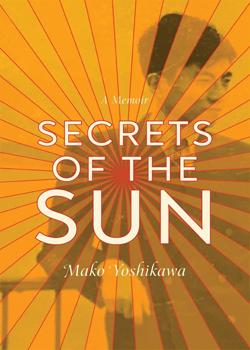
By Yoshikawa Mako
Mad Creek Books (2024)
ISBN-13: 978-0814258934
Review by Isabel Mermagen
Yoshikawa Mako is a Professor of Creative Writing at Emerson College in Boston, US, and in Secrets of the Sun she has written a searingly honest memoir detailing a daughter’s quest to understand her brilliant yet tortured father in the aftermath of his death.
Yoshikawa Shoichi was a Princeton physicist and internationally renowned nuclear fusion researcher, but he also suffered from severe bipolar disorder which came to increasingly affect his career and those closest to him. From the outset, it is clear that the author’s feelings towards her father are conflicted. She learns of his death hours before the rehearsal dinner for her wedding to which her father has not been invited. Nevertheless, the author decides to continue with her wedding and it is from the resulting sense of guilt, shame and ultimately grief, that a more nuanced image of her father, and her relationship with him, begins to emerge. Indeed, in an earlier interview, Yoshikawa admits that her marriage was the emotional launchpad for the book.
The author skilfully reveals more about herself and her father through a series of essays (some previously published) that detail distinct episodes from their respective pasts. We are made aware early on that both Yoshikawa and her mother were victims of domestic abuse by her father although we are spared too much violence, a conscious decision on the part of the author not to “pummel” the reader. It is also clear that Yoshikawa treads a fine line: she wants to be able to forgive her father, but in so doing does not want to fall into the victim’s trap of excusing his behaviour.
In one chapter titled ‘My Father’s Women’(p.17), Yoshikawa is surprised at the turnout for her father’s memorial and the fond reminiscences of many who had worked with him: ‘The image of adoring students and colleagues clustering around my father clashed with what I remembered’ (p.21). She also wonders about his relationships with women. Was he able to find solace with any of them, or had his illness made this impossible: ‘Who had my father loved? Surely the answer wasn’t - it couldn’t be - no-one. It was odd. The thought gave me a chill’ (p.29). She is also surprised that her father had perhaps understood the impact of his illness: ‘How shocked I’d felt when my father’s MIT friend said that Shoichi believed his disorder ruined his life: whether because I was naïve or optimistic or in denial, I hadn’t realized that he considered – that he knew – his life was ruined’ (p.36).
It becomes clear that her father’s career, though distinguished, did not quite fulfil its original promise and he is pictured as embittered by his failure to achieve glory for his work, drinking heavily and increasingly in the grip of his bi-polar disorder. However, as Yoshikawa delves deeper into her own research, she speaks to those who knew her father as a young man or worked with him in fusion energy and discovers that what mattered to him most of all was ‘to unravel the mysteries of the universe. What he wanted was to find truth’ (p.56). Like many Japanese of his generation, he was also deeply affected by World War Two and the bombing of Hiroshima and Nagasaki. As one of her father’s colleagues points out to Yoshikawa: ‘The earliest conferences on fusion were called “Peaceful Uses of the Atom”’ (p.56).
Coming to America less than 15 years after the end of the War must also have had a deep impact on her father and Yoshikawa admits that she had initially not wanted to believe that he had experienced racism, partly believing that it was something that was a part of his conspiracy rants. The lab at Princeton may have been diverse and populated by the liberal minded, but racism can be insidious and was certainly more pervasive in society as a whole. As the author reminds herself of an incident in her own past, often it does not have to be overt hatred and bigotry that leaves its mark, sometimes it is something more ‘slippery’ (p.76).
Again and again, the author returns to her father’s illness, trying to reconcile her father’s violence to the fact that he was sick. Yoshikawa’s struggles are eloquently expressed. It’s not as simple as saying that he was only abusive when he was suffering from his bipolar because the pattern of violence continued even when he wasn’t having a manic episode. With the help of her stepfather she begins to understand that a pattern of violence can be rooted in mania, so that the behaviour eventually becomes normalised. She also realises that so much of her anger towards him comes from his refusal to take the medication that he was prescribed. This is not a portrait of a monster, and although the mental breakdowns detailed are shocking, there are fond memories too, as well as a real sense of pride.
In the final chapter entitled ‘Tokyo Monsoon’ (p.130), we learn more about Yoshikawa’s father from his sister, Mitsuko. On discovering that she has an aunt that she never knew existed, the author travels to Tokyo to meet her and to find out more about her father’s childhood in Japan. Slowly the missing pieces of an incomplete picture begin to slot into place and whilst forgiveness proves elusive, we sense that there is compassion and understanding. Her father may not have fully revealed the secrets of the sun (i.e. fusion), but Yoshikawa uncovers those secrets that made him the man that he was and in so doing, finally comes to terms with her complex relationship with him.
This could easily have slipped into an account of a “tortured genius”, but it is so much more than that, and as a memoir, Yoshikawa bravely allows us to scrutinise her own feelings with each new discovery of the man that her father really was.