

Japanese Wine: History, Regions, Wineries (and Cheese)
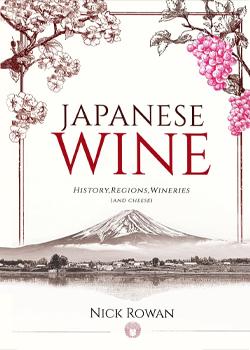
By Nick Rowan
Wine Fogg (2025)
ISBN-13: 978-1806054961
Review by Kylie Clark
Several high schools in Japan now produce wine, and in some regions, even elementary school children participate in winery activities such as planting, picking and crushing grapes, designing labels, and enjoying a meal at the winery - without tasting the wine, of course. These programs reflect Japan’s strong emphasis on food and nutrition education, where farm visits and hands-on agricultural projects are common from an early age. It’s the kind of insight that shifts your perception: wine in Japan is no longer something foreign or occasional, but part of everyday life. It was one of many fascinating insights in Japanese Wine: History, Regions, Wineries (and Cheese) by Nick Rowan.
Spread across Japan’s 47 prefectures are over 520 wineries used by over 725 producers, with Saga in Kyushu the only prefecture without a winery. In what is surely the most comprehensive guide to Japanese wine (not just in English - more detailed than anything currently available in Japanese), Nick Rowan provides everything you need to explore the world of Japanese wine. This includes profiles of every single producer, a history of wine in Japan, a thorough guide to grape varieties (including Japanese varieties such as Ryugan, or “dragon’s eye”, and Black Queen - names that may be unfamiliar, but which this book brings to life), and practical advice on where to try Japanese wine - from wineries offering tastings and accommodation, to wine bars and shops across the country.
Seldom seen outside Japan, and often thought of as a Western import, Japanese wine has a number of preconceptions to overcome. Japan’s officially recognised traditional alcoholic drinks - kokushu (国酒), meaning “national alcohol” - include sake (nihonshu), honkaku shochu and awamori, all of which are heavily promoted as representatives of Japanese culture. Naturally, when seeking a “Japanese” drink experience, these - along with whisky or beer - are usually chosen ahead of wine.
Yet, as Rowan explains in his history of wine in Japan, wild-growing yamabudo grapes were being fermented here as far back as 4,000-6,000 years ago. He also highlights that one of the earliest Japanese winemakers came from the Satsuma samurai clan and went on to make wine in California, becoming a major figure in the Californian wine industry in the early 20th century.
At a hefty 438 pages, this is an encyclopaedic guide, but it is thoughtfully structured and accessible to both wine enthusiasts and casual readers with an interest in Japan, food, or travel. Rowan himself spent three years in Tohoku teaching English, before moving into a corporate career. His growing passion for wine led him to undertake WSET qualifications, the internationally recognised Wine & Spirit Education Trust courses, and on return visits to Japan he found it surprisingly difficult to access information about wineries and the people behind them. This book is, in many ways, the guide he wished he’d had - and was inspired to write with encouragement from Johnny Toppon, former staff at The Japan Society, who is now establishing Zambia’s first vineyard and winery.
Partly inspired by travel guides, each wine region is accompanied by maps showing winery locations, along with practical tips for visiting. The Japan Winery Award ratings are included next to each producer, making it easy to identify standout wineries at a glance. For each listing, you’ll find website and social media details, guide prices, opening hours (where applicable), and information on what’s offered - be it tours, tastings, accommodation, cafés or restaurants.
I visit Japan on average six to eight weeks a year, and on recent trips I’ve increasingly been offered both sake and wine pairings at restaurants and ryokan that champion local ingredients. Yet when I’ve discovered a wine I particularly liked, it’s often been difficult to find out more about it. With the aid of Rowan’s book, I’ve been able to uncover the stories behind several producers I liked - and, importantly, discovered that some have tasting rooms open to the public in Yamagata, Yamanashi and Nagano. While I’d previously thought I might like to visit, I likely wouldn’t have made the time to work out how. Rowan’s book makes that entirely manageable, and I’ll certainly be planning visits on a future trip. A calendar of wine fairs and events also makes it easy to see what might coincide with your travels.
The book is invaluable for anyone hoping to explore Japan through its wine - or just to track down great wine bars in Tokyo, Kyoto, Osaka, or anywhere else in the country. It also serves as a useful resource for finding Japanese wine outside Japan, with listings of importers across Asia-Pacific, Australia and the USA. A section on award-winning wines helpfully highlights gold medal winners, which is particularly useful if you’re still getting to grips with producers or grape varieties. There’s even a list of Japanese winemakers working abroad, enabling you to seek out wines made by Japanese producers in countries such as France, Germany, Italy, Australia, New Zealand, South Africa and the USA.
The organisation Koshu of Japan has done excellent work promoting wines made from the Koshu grape, particularly from Yamanashi Prefecture, and has helped secure listings in UK wine shops and restaurants. Beyond Koshu, however, Japanese wine remains relatively hard to find outside Japan - and even Koshu often requires some effort to track down. This is not a reflection of quality: Japanese wines are winning international awards. Rather, it reflects the small-scale production of many wineries. At Obusé Winery in Nagano, as an extreme example, purchases are limited to one bottle of each wine per group - showing the artisanal, small-batch approach of some producers, though Japanese wine is increasingly accessible both in Japan and abroad.
There is a deep respect for farmers in Japan. It’s common to see information about who grew specific produce - watermelons, cherries, pumpkins - and wine is no exception. There is a clear appreciation for small-scale, high-quality production, and the grape growers and wine makers behind it. Japanese Wine brings these stories to life, revealing the journeys of individual producers. Notably, around 25% of Japanese wine production falls into the natural or low-intervention category (helpfully flagged throughout the book), further underscoring this artisanal approach.
If you needed any further convincing that this is the book on Japanese wine, it even includes lighter (but no less enjoyable) details: which wineries have the best resident pets - useful if a cute on-site shiba inu (a small, fox-like Japanese dog breed) might sway your itinerary - as well as notes on historic buildings, social welfare initiatives, and even glassware designed specifically for Japanese grape varieties. The book also goes beyond wine, including details of 115 cheese producers and some unique Japanese cheeses, making it a dream book for wine and cheese lovers interested in Japan’s broader food culture.
For anyone visiting Japan, or simply exploring its culinary and wine culture from afar, this book offers a journey through the country’s history, regions, and producers - a fascinating world that’s as enjoyable to read as it is to experience.