

NODA MAP presents --320°F
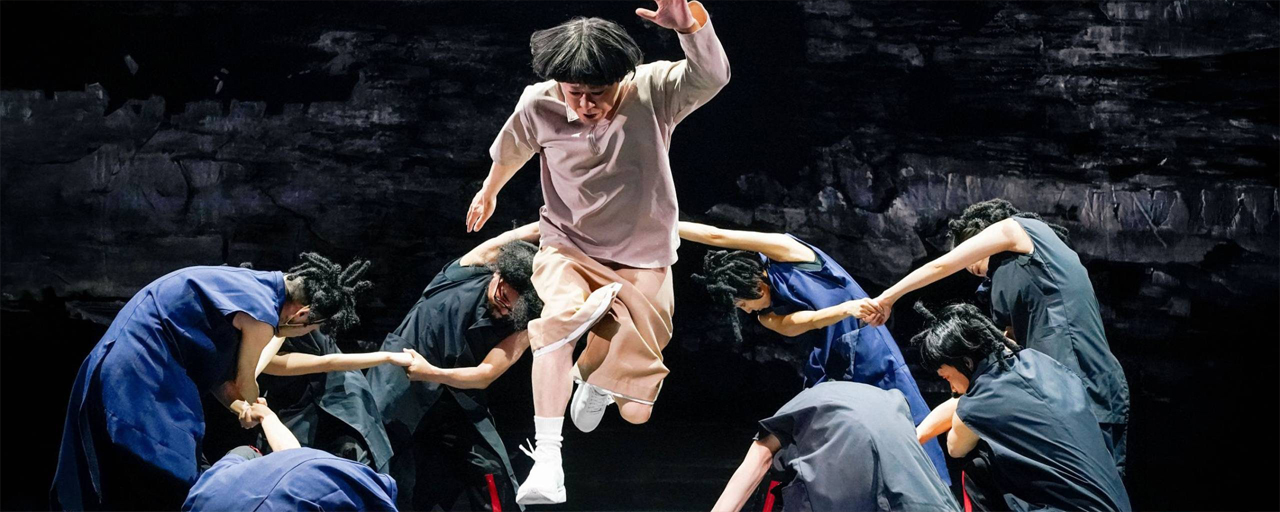
Director: Noda Hideki
Casts: Abe Sadawo, Hirose Suzu, Fukatsu Eri, and Noda Hideki
Sadlers Wells Theatre, London
(2-11 July 2026)
Review by Rachel Pratt
Noda Map’s -320°F is a fast-paced, raucous rollercoaster of wild characters, quick wit, and comedy, charging forward through challenging themes in a colourful explosion of creativity. Scattered with difficult existential, ethical and moral questions, it is not an amusing spin on the tea cups, more of a 90° plunge with hairpin bends and twisting loops resulting in whiplash and wild hair. It is a brave theatrical feat that you will not experience anywhere else.
Noda Hideki OBE is the founder of Noda Map and a multi award-winning Japanese playwright, theatre director, and actor based in Tokyo. -320°F is his third theatre show at Sadler’s Wells and remains true to his unapologetic and abstract creativity, often causing a stir amongst critics. His work in theatre has spanned over 5 decades and he continues to support and inspire generations of actors, directors and playwrights all over the world.
-320°F is set in a science-fiction fantasy world, following the story of a man called Help. Saved by science at a young age, Help discovers that he has been made with an ‘angel bone’ in his arm, which scientists believe holds the key to fulfilling human desires. This theory leads him on a wild transtemporal quest to find other angel bones within the past, present and future. As his adventure unfolds he meets an array of crazy and complex characters, including the notorious Faust, Mephisto and The Pied Piper of Hamlin (accompanied by his nose-twitching entourage).
The energy of this show was unprecedented. The production lasted nearly two and a half hours and not one performer showed signs of fatigue. Almost every actor had an energy that permeated their performance from the moment the audience took their seats, to the moment of applause. It was incredible to watch and exhausting in equal measure. Particularly impressive was actor Abe Sadawo (Help). His comic timing and delivery was relentlessly on point, and his physical endurance never faltered throughout a very highly charged and demanding role.
The surreal comedy in -320°F was fully embraced by the entire cast, especially the colourful and exaggerated roles played by Takada Shoko and Hashimoto Satoshi. The presentation of these characters with their bold costumes, kabuki-esque make-up, and extreme personalities were a little different to the rest of the ensemble, which lifted the performance after or during heavier scenes. The extreme farcical elements were well-balanced with some of the deeper themes within the play, which created a dance between comedy and tragedy, both well known for going hand-in-hand. In the program notes, Noda Hideki highlighted that the tragic Yamayuri-en incident inspired part of the script, a heartbreaking and rare mass shooting in Japan. He commented that ‘the more intense, seemingly excessive expressions in this play are inspired by the real words spoken by those involved in the tragedy’, which made the more intense and surprising moments conveyed by the actors, incredibly poignant.
The set design and scene changes were particularly clever. There were very slick and simple changes that happened incredibly quickly, and the staging was minimal with a distinctive Brechtian feel to it. I felt that utilising this style opened the performance out into the audience and invited us to think more deeply about the questions posed by the play. This, coupled with ‘breaking the fourth wall’ (speaking to the audience directly), another Brechtian device, made the performance a collectively shared and meaningful experience for many. It was unfortunate that some of the temporary set pieces used for specific scenes slightly obscured the translation board depending on your sightline. I’m sure the person behind me, who coincidentally did not have use for the translation text, was less than impressed with me bobbing around like a meerkat trying to read and watch what was going on at the same time! These moments were rare however, as the staging constantly evolved to mirror the galloping narrative and swift scene turnarounds.
Accompanying the ingenuity of the dynamic set and scene changes, the lighting and music were also thoughtfully designed to create an even more visceral connection with spectators. The stage lighting connected to lights in the auditorium at certain points, which I felt brought the audience further into the play, becoming part of the stage itself; a simple, yet effective technique. The music was composed by Marihiko Hara (composer for the critically acclaimed Japanese feature film Kokuho). Mr Hara’s ability to capture the core emotions within a scene were beautifully executed, and Noda Map utilised these bespoke compositions to deeply move the audience at specific moments. The clever use of theatrical devices gave the audience an intensely multisensory experience, which for some, may have felt overwhelming or excessive. For others like myself, the verbal and visual messages within the play took time to fully permeate until I could make meaningful connections of my own. Only on reflection was I able to appreciate how deeply complex and personal the show had been.
Overall, I felt that -320°F was one of a kind. It managed to present our scientifically driven society of questionable capitalist values as an open, and thought-provoking experience buoyed with plenty of laughter. There will be something within this play that any theatre-lover can engage with, but it is not for the passive viewer. There are often multiple messages being conveyed at the same time through various theatrical devices at an almost overwhelming pace. I would therefore recommend sitting back, enjoying the rollercoaster, and don’t expect to immediately understand all the twists and turns of the track. It is a very subjective and personal experience and, for me, when the dust had settled and the myriad of emotions had time sink in, I found more moments of beauty and profound meaning than I could count.