

The Traitor
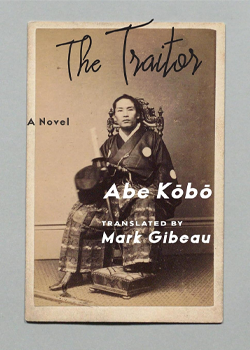
By Abe Kobo
Translated by Mark Gibeau
Columbia University Press (2026)
ISBN-13: 978-0231212953
Review by Tyriq Baker
The Traitor is a fictional work based on real characters and real events, mostly centred on the period of the Boshin War (1868-1869). It is a time when Japan had undergone a major transition from the fall of the Tokugawa shogunate (1603 to 1868) to becoming Imperial Japan and integrating into the international relations. The book is written as a story within a story with the main story led by a newly trained samurai by the name of Asai Jusaburo, who recounts of being a samurai in the Shinsengumi (shogunal police force) during this critical period. This account appears then within the story discovered decades later by a man named Fukuichi.
Similarly, Fukuichi’s story is told through the first-person perspective of another man, a writer, who has encountered Fukuichi by chance whilst staying at his inn in Hokkaido. Fukuichi shares his passionate story about a group of convicts at the end of the shogunate who had taken control of a small town at the coast Hokkaido from mainland Japan, before making their way inland, where they are not heard from again. However, this hearsay story, from a man who has seemingly lost his identity and self in the story as he grapples with his past life as a former Kempeitai (military police of the Imperial Japanese Army), becomes something beyond just anecdote.
After his trip to Hokkaido, the writer receives a package from Fukuichi, confirming the rumour of this story, and how it links to the man Fukuichi admires and has a slight familial connection through an anecdote from his grandmother - Enomoto Takeaki, a true historical figure - a samurai and naval commander during the end of Tokugawa shogunate and into the Meiji period (1868-1912). The story, titled A Complete Account of the Formation of the Five-Man Conspiracy, is the story we then follow - and that’s where we meet Asai Jusaburo - and we are taken back to the 1860s Japan during this crucial period of reckoning with its former shogunate identity and its new imperial identity.
We are first introduced to Jusaburo as a man of zealous desires to make rights to this wrong, and have himself arrested in order to reach Enomoto, and the lengths he goes into forming this plot. In his historical account, Jusaburo implores four people to join him in his plot to have Enomoto assassinated by getting into the prison where Enomoto has been confined for his betrayal to the Shinsengumi and to the shogunate. Hence the title of the ‘five man conspiracy’.
The novel then follows Jusaburo’s journey prior to that moment from being a travelling peddler of concoctions, to then being trained as a samurai and becoming part of the Shinsengumi, the samurai militia created to protect the shogunate. However, Jusaburo joins at a crossroads period, whereby the way of the samurai is becoming questioned in a society slowly embracing the new Western ideals being introduced into Japan. Through him, we align with the perspective of Hijikata Toshizo, vice-commander of the Shinsengumi, who brings Jusaburo into the fold of the Shinsengumi. As Jusaburo is the right hand man of Hijikata, we get an inside story of their journey as the they join with other ally forces, only to discover that what they think they will be fighting for, is not the intention of the commanders they entrust themselves to.
Throughout this story, we are treated to the primary account of Jusaburo who is more than a fly on the wall during the wars of 1868-1869. We get his first person perspective, but the account also includes context and histories from other sources, (notified from early that the account is a collection of other sources that help to give context of events and timelines during this period).
The main theme of the novel is undoubtedly the meaning of loyalty: is it wise to be loyal to the traditions of old, or is loyalty to embrace the traditions of new? Abe Kobo constructs this narrative so masterfully, with characters that hold so many layers and conflicts, and a depiction of a rapidly changing society where the concepts of loyalty and betrayal are deeply intertwined.