Exhibition - Hyakkō 100+ Makers from Japan
at Japan House London
Review by David Tonge
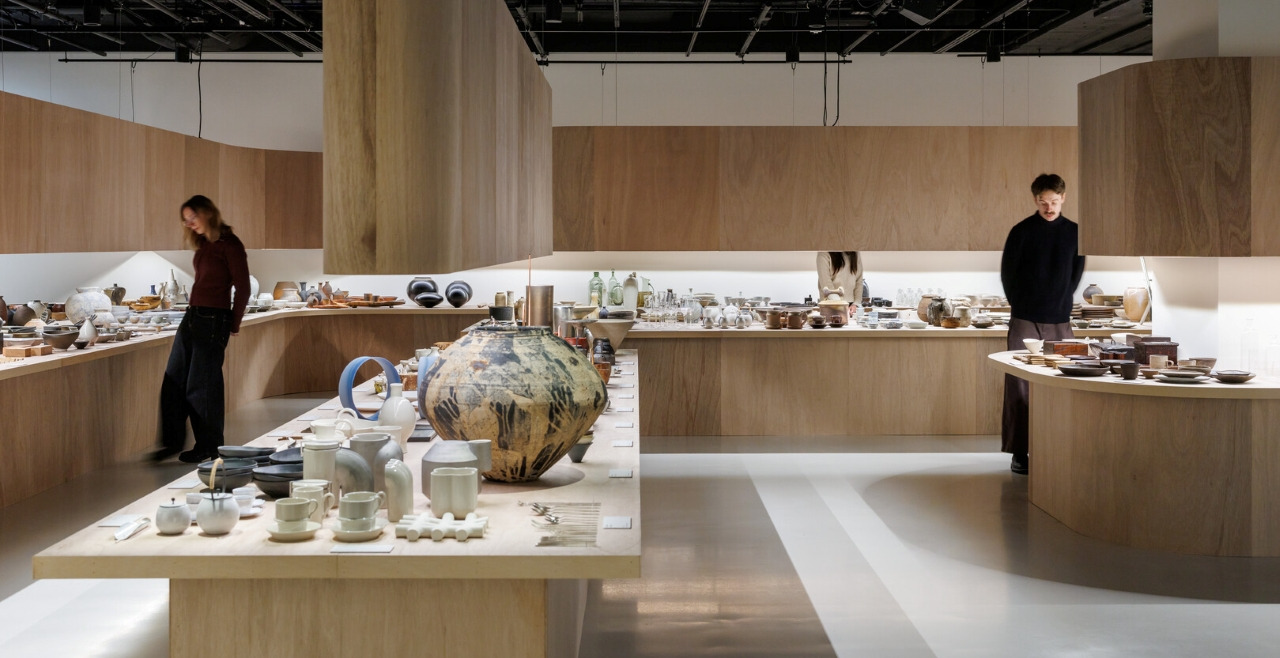
Jeremie Souteyrat © Japan House London
Hosted by Japan House London and organised by Ryohin Keikaku - or Muji as we know it in the UK - this exhibition was first shown at their flagship store, Atelier Muji Ginza, in Tokyo. It is the brainchild of Nagata Takahiro, curator of the Atelier Muji gallery and exhibitions elsewhere in Japan and overseas.
The meaning of Hyakkō (百工) is 100 makers. But more broadly it means many makers. There are slightly more than 100 makers showcased here, with around 2000 objects on display.
The exhibit, as always at Japan House, is beautifully designed. Starting, usefully, with a glossary of keywords used to describe Japanese crafts.
After these, a mesmeric video of some of the makers working in their studios turns names into real, tangible people. Galleries tend to elevate artists and makers into demigods; these videos help us to understand they are just like you and me. And, as a part-time ceramicist, it was great to see other makers technique and processes.
Then a simple, effective, snaking waist height table guides visitors around the space. I was taken aback by the sheer volume of objects. You are in a gallery and marketplace at the same time. Labelling is minimal, focusing on the name and region of the maker, keeping the visual noise down to a minimum and allowing you to enjoy the brilliance of the objects.
The whole effect of the exhibit design and artefacts communicates the essence of Japan, as a place of ‘Absence and Abundance.’
The objects on show cover ceramics, metalwork, leatherwork, glassware and more. The skill required to create these is stunning, inspirational and communicates the passion for handcrafts that, I am happy to report, thrives in Japan’s younger generations. They are all beautiful in their own ways, and you will have your own preferences and favourites.
For me, Kakiuchi Shinya, Kyoto – beautiful and subtle transitional forms in glassware, Otani Tetsuya, Hyogo – incredibly elegant ceramic bowls and Nakamura Yuki, Saitama – beaten metal, beautiful and expressive form teapots, are all equally wonderful.
This show is to be experienced not spoken or written about, so I urge you to go and visit one of my favourite shows at Japan House so far. Going back to the glossary as you enter the exhibit, if I had to choose one word and description to sum up the show and the objects on display it would be:
Yugami – distortion, irregularity
‘This refers to the slight deviation from a perfectly symmetrical form. In handicraft, yugami is not a defect but a source of individuality and warmth. Sometimes deliberately retained, it reveals the vitality born from the collaboration between a human hand and natural materials.’