

At the End of the Matinee
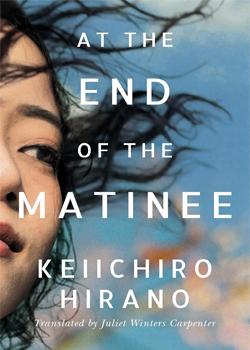
By Hirano Keiichiro
Translated by Juliet Winters Carpenter
Amazon Crossing (2021)
ISBN-13: 978-1542005180
Review by Azmina Sohail
There is nothing that will prepare you for the rollercoaster that is At the End of the Matinee. The novel by Hirano Keiichiro won the Watanabe Junichi Literary Prize in 2017 and it is clear to see why. This isn’t just a love story but a testament to fate and how what is meant for you, will undoubtedly reach you.
Every author has a reason to write their story and Hirano's is laid out in his prologue. ‘…while fiction makes it possible to refrain from revealing some secrets, it is the only way to reveal others. I wished…to write freely about their inner emotional lives by presenting them as fictional characters’ (p.1). By characters, he means his protagonists, classical guitarist Makino Satoshi and journalist Komine Yoko. He implies that these characters exist in real life but various details like names, ‘organisations they belong to, the chronology of events, and so forth’ have been altered (p.1). It is this notion that will spur your excitement and elevate your curiosity to go on because whilst fiction is storytelling at its finest, it is often real life that contains the greatest stories.
Human emotion drives the plot forward. We are first introduced to Makino backstage after a concert, exhausted but proud of his performance; a man clearly aware of his talent and status in the classical music world. Yoko, a sweet-natured but head-strong journalist is appreciative of his work and has a clear personal connection to it. Whilst their initial dialogue is moderate, it is this moment that connects the two and sets off a turn of events that bring them closer and separate together.
Curiosity and interest in each other are slow but intense with music being the tether. Some of the most standout scenes detail their deep expressions of admiration for it which fans of the genre can fully indulge in. The notion of change is a prominent idea for Makino for when ‘listening to a musical theme develop, you come to see that it contained a certain potentiality all along. Once you follow it to the end, the theme never sounds the same again’ (p.18). The subtle reference to Beethoven’s diary entry is the essence of his approach to composition: ‘Ascertain all in the evening’ (p.18). He believes that when you reach the end of a piece of music, your perspective on what you first heard changes. Similarly, the events of the day often look much different once you reach the evening. A clear and beautiful allegory for life also reflective of the novel’s title and reminiscent of Kazuo Ishiguro’s The Remains of the Day.
Like all memorable stories, an unexpected twist is always welcome. Hirano explores this through mental health and PTSD, offering us insight into the strength it takes to deal with a destructive and debilitating condition, particularly during a war. It seems that no matter what the brain experiences, it will always find a way to fight back and heal, but time is needed. A testament to the beauty and strength of neuroplasticity.
Throughout the book, Hirano’s language is gentle and therefore reflective of Yoko and Makino’s feelings for each other. But like all relationships, jealousy can appear from external forces. It becomes a vicious emotion signifying nothing but weakness and can alter the course of a life forever.
Despite this, Yoko and Makino remain stoic. They seem to be connected to a power greater than themselves and turn fate into something very plausible. Their love is slow but not certain but as the story progresses there is something that tells us that these souls are connected beyond human understanding. They are thrust across countries, people and time, all the while serving as a mirror for each other battling love, loss and uncertainty.
Ultimately this story has the power to reflect and question reality. It a love story about composition; how in life and in music, what has been planned will inevitably play out. As much as we feel we are in control of our destiny, there are signs that a power beyond human control is at work. Hirano Keiichiro understands this and has laid it out beautifully for the world to see.