Japan: A History in Objects
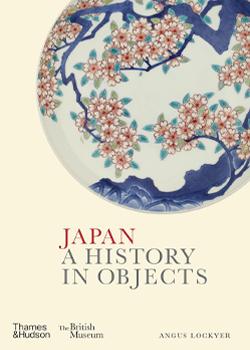
By Angus Lockyer
Thames and Hudson (2026)
ISBN-13: 978-0500481196
Review by Laurence Green
We are the things we use. Or, at least, that’s what it feels like sometimes. But it’s a fair shot to say that societies are invariably defined by the material possessions they leave behind, and short of actually getting hands on with those objects themselves, then the next best thing is seeing them up close and reading about the stories they tell us. This latest volume from Thames & Hudson certainly doesn’t disappoint on that front, inviting us to step into 15,000 years of Japanese history brought vividly to life through extraordinary objects from the British Museum.
From ancient flame-rimmed pottery to sleek modern manga, this dynamic journey sweeps across the ages, uncovering the rise of Buddhism, the power of samurai warriors, and the transformations that have shaped Japan up to the present day. Along the way, you’ll encounter intricate jewellery, stunning suits of armour, delicate textiles, and dazzling folding screens, each telling the story of the people who lived with and created these objects.
We hear stories of farmers, merchants, warriors, and modern women - all emerging through these artefacts and revealing a culture that is as complex as it is captivating. Rich in craftsmanship and imagination, this collection paints a powerful, immersive portrait of a society that continues to fascinate the world, drawing not only thousands of visitors to the Japanese collections in the British Museum, but many millions more to travel to Japan itself.
What really works best about this visual feast of a book is that for the most part it feels like a halfway house between the slightly more academic feel of Thames & Hudson's long running World of Art series (beloved of Art History students everywhere), and a full on coffee table photo book. The result is an accessible, richly illustrated volume that is perfect for dipping into - a kind of visit to the museum by-proxy, all bound up in a luxurious feeling hard-cover presentation.
There's also a lot of fun overlap with the British Museum’s recent best-selling Samurai exhibition. This re-occurrence of key objects if anything shows how fruitful the ability to rely on the British Museum's Japanese holdings are, and how by drawing on them, a show stopping five-star exhibition can be assembled from rock solid foundations. If the panoply of effusive reviews are anything to go by, Samurai joins the long succession of shows including the Shunga, Hokusai, Hiroshige and Manga exhibitions which have thrilled visitors over the past decade.
For me, this book’s strongest section is the rich seam of materials relating to the import and manifestation of Buddhism in Japan - this fascinating process and its coexistence with the native Shinto religion is endlessly interesting and is perfectly documented through key objects ranging from intricate mandalas to carved statuary. There’s something deeply contemplative about these pieces, and there’s a reason they form such a mainstay to the museum’s permanent collection - a kind of haven of peace and quiet reflection away from the hordes of tourists flooding the Egyptian galleries on the lower floors.
As things move closer to the present day, things get more problematic, however. While this closing of the loop, so to speak - bringing the history of Japan into the 21st century - is an essential part of the story, it's also arguably the weakest area in that it feels most at risk of potential curatorial bias and by what has been donated to or acquired by the museum more recently. I kept asking myself, is this really the “Japan” as seen and understood by an “average” Japanese? Where is their voice in this?
Instead, the tone in these closing pages felt overly intellectualised and didactic, presenting a bizarrely skewed socio-cultural snapshot of Japan that felt heavily orientated towards the arts but removed from a sense of lived experience. There are also some strident comments about Japan's gender inequality here that, while unfortunately accurate, feel overly politicised and out of place in a book that for much of its length feels more neutral and unjudgemental in approach.
The end result is a volume that feels like a compelling and powerful restatement of just how deep and rich the British Museum's holdings of Japanese objects are. But this is paired with an unresolved search for what a portrait of Japan in the 21st century might look like. Amidst a trajectory of objects that encompass a history still catching up with itself, this book presents one potential view, one potential history - it is for the reader to decide if this fits the image of “their” Japan.