Contents Tourism and Pop Culture Fandom
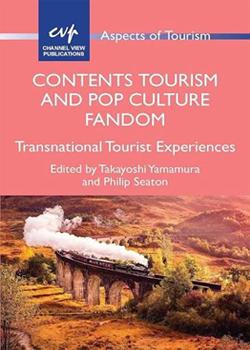
Edited by Yamamura Takayoshi and Philip Seaton
Channel View Publications (2020)
ISBN-13: 978-1845417215
Review by Kiki Luk
The act of traveling to a specific city or country simply because it was depicted in a video game, film, or animated series was once widely dismissed as a frivolous waste of time and money. For decades, the "pilgrimages" of dedicated fans were viewed as niche hobbies with little substance. However, as the global media landscape has evolved, these fan-centric activities have proven to be much more than mere personal indulgence. They have become powerful engines for cultural exchange and economic growth. In the scholarly yet accessible edited volume Contents Tourism and Pop Culture Fandom, readers are given a comprehensive look at how "contents tourism" - the phenomenon of travel stimulated by narrative media - is reshaping our world.
What sets this book apart from general media commentary is its rigorous academic grounding. It is not merely a collection of anecdotes; it is a meticulously researched compilation of figures, surveys, and site-specific case studies. The authors take a multidisciplinary approach, blending sociology, economics, and geography to explain why a fictional story can inspire someone to buy a plane ticket.
An interesting dynamic within the book is the perspective of the authors themselves. In several chapters, the researchers visited the locations in person to conduct field studies. While some openly admit to being fans of the "opus" (the work of art) being studied, they maintain an impressive level of objectivity. They don’t just describe the joy of being there; they analyse the infrastructure, the demographic shifts of the tourists, and the long-term sustainability of these sites. This balance of "fan passion" and "academic detachment" lends the book a high degree of credibility.
In addition, the book provides a global tour of economic transformation driven by media. One of the most prominent examples discussed is the Lord of the Rings effect on New Zealand. The authors illustrate how a single film franchise managed to rebrand an entire nation as "Middle-earth," leading to a permanent increase in tourism revenue that lasted long after the films left theatres.
Similarly, the book explores the "Korean Wave" (hallyu) and its impact on Southeast Asia. A fascinating chapter details how the popularity of K-pop and K-dramas has led to a consistent surge in Thai tourists visiting South Korea. This is a prime example of "soft power" - how a country’s cultural exports can directly influence the economic choices of people thousands of miles away.
The impact of these fans is so significant that it physically alters the environment. The book notes that in places like Marsh, the sheer volume of Japanese tourists attracted by specific media links has led to the installation of Japanese-language signage and specialized services. This "linguistic landscaping" shows that local governments are no longer ignoring fans; they are actively redesigning their cities to welcome them.
One of the most thought-provoking sections of the book discusses how pop culture does not just replace local culture, but often merges with it to create something entirely new. This is referred to as cultural hybridity. The authors point to "monster villages" in Japan and Taiwan, where traditional monster (yokai) is reimagined through the lens of modern anime aesthetics to create themed tourist destinations.
Furthermore, the book explores how fans in countries like Indonesia engage with global media. The authors describe Indonesian cosplayers who do not just replicate Japanese characters, but occasionally blend those designs with local celebrities or traditional garments. This suggests that contents tourism is not just about passive consumption; it is an active, creative process where fans “localize” the things they love.
Beyond the numbers, the book delves into the psychological motivations of the fans. A significant portion of the text is dedicated to the "2.5D Theatre" phenomenon - musical or stage adaptations of 2D manga and anime. For a fan, 2.5D theatre is a magical bridge; it is the closest one can get to seeing a fictional character come alive in the physical world.
The authors also analyse the importance of "communal events," such as character birthday celebrations. These are not just parties for fictional people; they serve as vital social anchors that allow fans to gather, share their identities, and form communities. Even the "wrapped" planes or trains (vessels decorated with character livery) are analysed not just as advertisements, but as part of the "immersive journey”. For a fan, the holiday begins the moment they step onto a plane feeling their hobby already validated.
Despite the wealth of information, the book is not without its flaws, particularly regarding the reader’s experience. One notable issue is the lack of translation or explanation for specific Japanese terminology in certain chapters. For a book that aims to explain a global phenomenon, leaving niche terms untranslated can create a barrier for international readers who are not already "insiders" in the anime world.
Furthermore, the book suffers from a lack of visual support. In a work centred on "contents" -which are inherently visual media like films, games, and comics - the absence of photographs or diagrams is a missed opportunity. It can be difficult for a reader to fully grasp the scale of a "monster village" or the intricate detail of a 2.5D costume based solely on text. Including visual evidence would have made the researchers' findings even more impactful.
As an anime fan, reading this book was a deeply validating experience. For a long time, society viewed the "otaku" or the obsessed fan with a degree of skepticism or judgment. This book turns that narrative on its head. It proves that the time, effort, and money fans spend are not "wasted”. Instead, they are contributing to a vibrant, interconnected global economy and helping to preserve cultural sites through their patronage.
Contents Tourism and Pop Culture Fandom teaches us that being "addicted" to the things we love can have a profoundly positive impact on society. It suggests that in the future, the line between "fiction" and "reality" will continue to blur, as our favourite stories continue to shape the physical world we travel through. For anyone interested in the future of tourism, media, or sociology, this book is an essential - if occasionally challenging - read.