

Osozai: Everyday Japanese home cooking
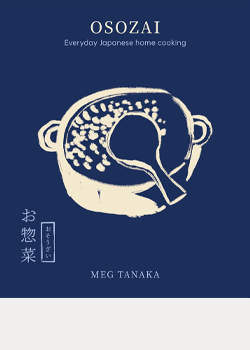
By Meg Tanaka
Harper Collins (2026)
ISBN-13: 978-1460769317
Review by Laurence Green
All the way back in 2019, I picked up a cookbook from the shelves of a book store - lured in by its clean minimalist aesthetic and a vibe that instantly set it apart from the so many other deliberately “exotic” Japanese cooking volumes on sale at the time. Meg Tanaka’s CIBI - inspired by and drawing from the repertoire of the restaurant of the same name she has run with her husband Zenta since 2008 (with locations in both Melbourne and Tokyo) quickly became a favourite of mine, not just because of the chic photography of mouth-watering dishes, but because it seemed to offer more than just instructions on how to cook - it offered a window into a mindset of good eating, community, and the role of food within an urban locale.
For the longest time, I had found cooking stressful - deciding what to cook, grabbing specific items needed for it from the store, all the prep work and cleanup. But once I discovered the Japanese concept of Ichijū-sansai ( 一汁三菜 ) 'one soup, three dishes’ - everything changed. I’m not the only one singing its praises - Doi Yoshiharu’s book Rice, Miso Soup, Pickles: The Japanese secret to a long and happy life (recently translated into English) also extols the benefit of this cooking format, and once you understand the essence that rice, a soup, and a selection of side dishes can form an endless variation of easy, tasty meals, you feel like you’ve cracked the system. And a system it is - instead of worrying about what to buy or prep, the core basis is always there, and there’s a profound joy in that simplicity.
With this in mind, Tanaka’s new book Osozai gives you an endless wealth of inspiration to get creative with new side-dishes to add to your repertoire. Many will be familiar - you can never get bored of crispy karaage or the crunchy tang of pickles. But what’s more fascinating is where the book blends over into more Western influenced cuisine. There’s a big focus on gratin, and you can easily imagine how this dose of comfort eating has become a favourite in their restaurants. It’s an inspired turn on what the notion of a “Japanese” side-dish can encompass and pivots the whole notion of what a cookbook like this can function as.
Flipping through the pages, immediate standouts come to mind - the charred eggplant with tomato, shiso and honey ginger sounds like a dream, while the peanut butter and sesame-ae is so utterly simple in conception, but you just know it would be the perfect accompaniment to any meal. With a store cupboard of Japanese essentials (mirin, soy sauce etc.) most of the dishes here are utter simplicity to knock up, and that “let’s give it a go” urge is exactly what a good cookbook should engender.
To come back to the central premise of both Osozai and CIBI - I think what lies at the heart of it all is the blurring of the line between what we conceptualise as “home cooking” and eating out. We often imagine eating out as a treat, the chance to indulge, where we really let our taste buds loose and go for all our favourites. I think it’s a big part of how we see Japanese cuisine here in the UK - where sushi and ramen restaurants are literally everywhere in London now. But there’s a quieter, more humble side to Japanese cuisine too, and it’s every bit as tasty. While the UK might not yet have cottoned on to the ubiquitous ‘set meal’ cheap eateries that are ten a penny in Japan, the concept holds true - with a bowl of rice, miso soup and a selection of side dishes (usually one protein, and a couple of small veggie options) you’re basically set for the day. Healthy, nourishing and filling - it’s a food revolution in the gentlest way possible.
Osozai, then, can be seen as a kind of permission to enable this way of eating within your own home - to let in the kind of system and style of eating you might never have imagined could exist within the possibility of everyday home cooking, instead of as a rare “treat” or excursion into the Asian food aisle of the supermarket. Armed with a few of the recipes from this book, you can essentially dip into something new every day of the week - but always, and this is crucial - keeping that base of rice and soup central.
It’s about sharing, it’s about balance, it’s about the joy that cooking can represent when it’s no longer seen as an exhausting struggle to rush through at the end of a long day - and I think the more people who come to understand the kind of freedom this style of cooking and eating can unlock, the better.