The Japan Society Public Lecture Series: July – September 2025
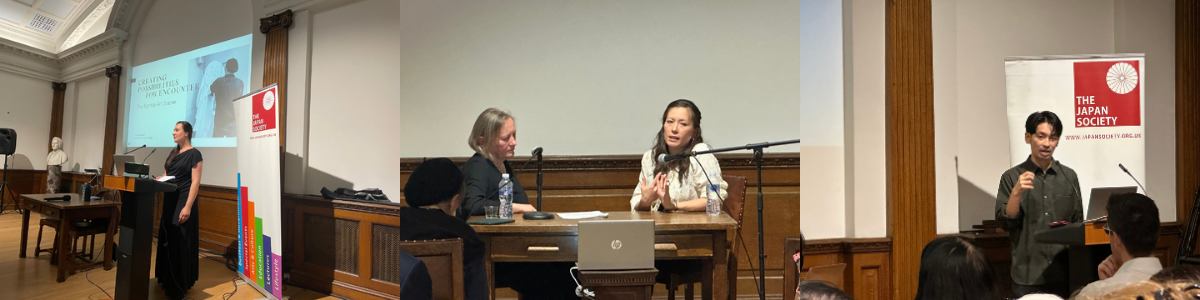
In July, August and September 2025 we showcased some highly engaging lectures that explored the Kansai art scene, testimonies of atomic bomb survivors, and how far-right movements have evolved in 21st-century Japan.
We would like to pay a special thanks to our speakers: Dr Iza Kavedžija, documentary director Megumi Inman and Dr Yutaka Yoshida together with everyone who attended the lectures. Please read below for a summary of the lectures.
Click here for upcoming lectures and Join The Japan Society Mailing List to stay informed of future events.
|
Become a member of The Japan Society and have exclusive access to the video recording of most of the lectures and many more events in the "members-only" playlist on our YouTube channel.  |
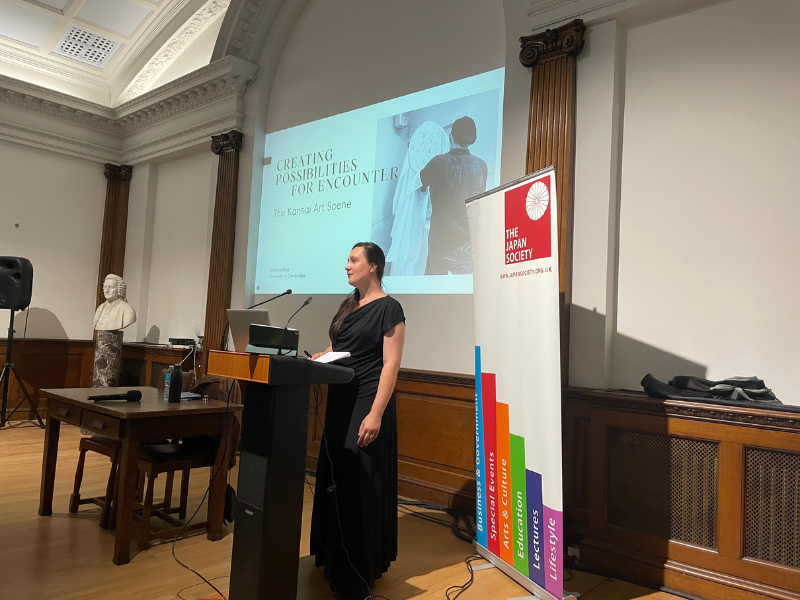
21 July - Creating Possibilities for Encounter: The Kansai Art Scene
Drawing from her extensive ethnographic fieldwork in Osaka and Kyoto, Dr Iza Kavedžija (University of Cambridge) challenged the Western romanticised notion of the "lone genius" by presenting creativity as a deeply social and environmental practice. She introduced the concept of "active attunement," the idea that artists do not simply force their will on materials but rather foster a state of readiness to respond to the unexpected. Kavedžija explained that in the Kansai region, there is a striking move away from the hyper-commercialised "white cube" gallery culture of Tokyo, with artists favouring communal spaces and experimental "encounters" where the process of making is just as important as the finished product.
A central theme of the lecture was the Japanese concept of ma—the "space" or "interval" between objects and moments. Kavedžija argued that by focusing on this interval, artists create a "possibility for encounter" with materials such as clay, light, or found objects. She emphasised that this practice has profound implications for mental health and social resilience, and by embracing the "uncontrollability" of the creative process, individuals learn to navigate the broader uncertainties of contemporary life.
Kavedžija demonstrated that creativity is far more than the production of objects. It is a way of being in the world that allows individuals to transform the "stuckness" of daily life into a flow of meaningful, shared experiences, and bridge the gap between artistic practice and social transformation.
4 August - Atomic People: Memories of the Hibakusha on Screen
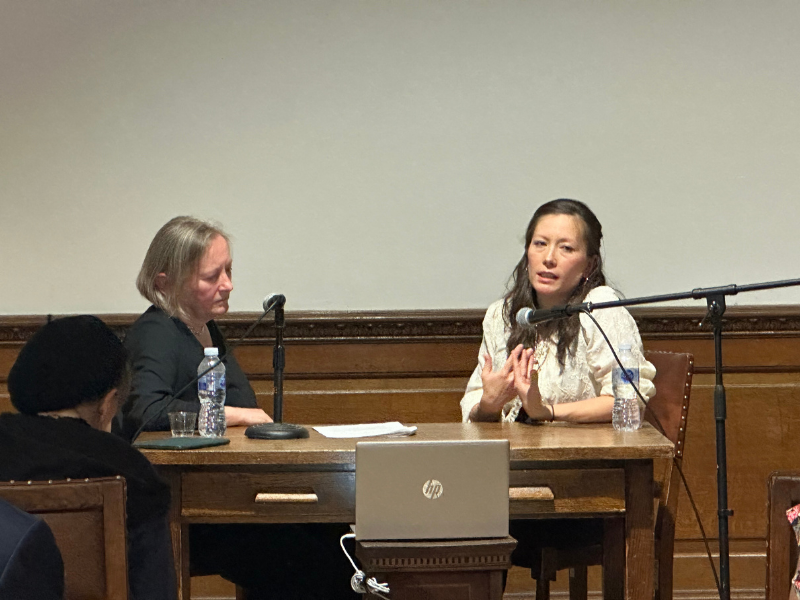
Documentary filmmaker Megumi Inman together with Jenny White co-honorary editor of The Japan Society provided a moving look at the making of her film Atomic People, a BBC project motivated by the urgent reality that the generation of hibakusha (atomic bomb survivors) is rapidly disappearing. With the average age of survivors now over 85, Inman explained that her goal was to move beyond the "official" historical narrative of the 1945 bombings and capture the raw, sensory memories of those who lived through it. She described the survivors’ recollections not as philosophical facts, but as vivid physical memories: the specific "silver shimmer" of the B-29 planes in the sky, the terrifying "black rain" that fell after the blast, and the haunting silence of a destroyed city.
The conversation discussed the social legacy of the atomic bomb, particularly the decades of silence many survivors endured. Inman detailed that many hibakusha hid their condition for years, because of fears that they or their children would be unable to marry or work due to the public’s fear of radiation sickness. This "stigma of the scar" is a central theme of the documentary, which uses extreme close-up cinematography to document the physical evidence of the tragedy on the survivors' skin.
By giving these survivors a platform to speak, Inman conveyed that we are not just preserving history but also issuing a vital warning for the future. The film serves as a testament to human resilience, showing how these survivors eventually found the courage to speak out against nuclear proliferation, turning their personal trauma into a global message of peace.
15 September - The Rise of Far Right Movements in 21st Century Japan
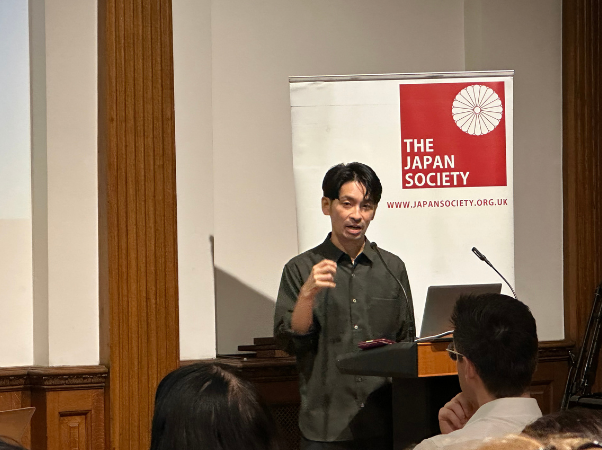
In this lecture, Dr. Yutaka Yoshida examines the evolution of far-right movements in 21st-century Japan, focusing on the remarkable political ascent of the Sanseito party. He argues that while Sanseito appears to be a modern, polished political force, winning thirteen seats in the 2025 general election, its success is deeply rooted in the ideological groundwork laid by predecessors like the Zaitokukai and the Japan First Party. By framing the movement as a Do It Yourself YouTube project and a means of 'self-enlightenment', leader Kamiya Sohei has successfully mobilised a younger, digitally active demographic, effectively moving far-right rhetoric from aggressive street protests into mainstream institutional politics.
The lecture identifies significant ideological continuities between these movements, particularly through the lens of nativism and historical revisionism. Both Sanseito and earlier groups rely on the Japan First mantra to problematise foreigners, specifically targeting welfare benefits and land ownership under the guise of national security. Furthermore, they promote a revisionist view of history that rejects a 'masochistic' post-war education, claiming that the Japanese public was brainwashed by the US led War Guilt Information Program. Sanseito adds a unique twist to this by expanding their historical grievances back to the 16th century, framing Japan as a perennial victim of 'international financial capitalists' and global elites.
Finally, Dr. Yoshida emphasizes Sanseito’s strategic use of conspiracy theories and conspirituality to build a devoted membership base. Unlike traditional fringe parties that might hide extremist views to gain broader appeal, Sanseito openly embraces conspiratorial thinking regarding COVID-19 and 'Deep State' influence to foster a sense of 'awakening' among its followers. By utilising a high-production YouTube presence and a tiered membership model, the party has turned political participation into a form of identity and lifestyle. This shift suggests that the Japanese far-right has transitioned from marginal street harassment to a growing, organised force capable of significantly disrupting the established political order and influencing mainstream conservative discourse.
Supported by the Toshiba International Foundation (TIFO)